

Tiny house legislation in Belgium and the Netherlands
One of the biggest hurdles for people wanting to place a tiny house is the legislation. Where is it allowed? When do you need a permit? How do you apply for one? And what are the pitfalls?
Despite a tiny house on wheels being prefabricated and transportable, the legislation regarding the placement and use of tiny houses differs in Flanders, Wallonia, and the Netherlands.
Legislation is not an obstacle. It is a puzzle that you can solve.
Bert Schelfhout, managing director of Tiny Wonder, was a councillor in Deerlijk for six years. He knows how municipal authorities, permit procedures, and spatial planning work not from a course, but from daily administrative practice. He knows how a file is assessed, where the room for manoeuvre lies, and how to substantiate an application so that it has a chance of success.
We will apply that knowledge for you.
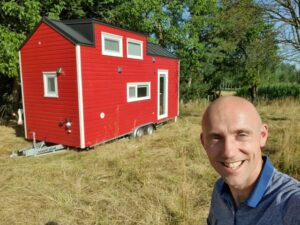
“Tiny houses can be permitted if you know how to go about it. We've succeeded in getting tiny houses permitted on multiple occasions, even in locations that seemed more difficult.”
— Bert Schelfhout, managing director of Tiny Wonder and former Belgian alderman of Deerlijk
Tiny Wonder is liaising with policymakers regarding tiny house legislation in Flanders, including the cabinets of the responsible ministers. We closely follow the regulations and can inform you about any changes that are relevant to your project.
Flanders
In Flanders, there is no separate, specific legal framework for tiny houses, but there are clever exemptions you can utilise. Consider the four-month rule, the renovation exemption, and care housing via notification.
What you will learn in this article:
- When you don't need a permit (and why that happens more often than you think)
- The renovation exemption of one to two years
- Care living via a reporting procedure
- Direct Debit: what you can and cannot do
- Step-by-step plan for your project in Flanders
Wallonia
Wallonia is Belgium's pioneer in tiny house legislation. Since 2019, Walloon housing law has officially recognised “light dwellings” as a separate category. This offers more legal certainty, but also more obligations.
What you will learn in this article:
- De definitie van “habitation légère” (lichte woning) en wanneer jouw tiny house eronder valtIn Frankrijk verwijst de term "habitation légère de loisir" (lichte recreatiewoning) naar een verplaatsbare woning die bedoeld is voor **tijdelijke bewoning**, voornamelijk voor **recreatieve doeleinden**. Dit omvat doorgaans:* **Stacaravans of chalets**: Prefabricaties die vaak op standplaatsen op campings of in parken worden geplaatst. * **Tiny houses**: Kleine, verplaatsbare woningen die vaak op een trailer zijn gebouwd.**Wanneer valt jouw tiny house onder de definitie van "habitation légère"?**Jouw tiny house valt onder deze definitie als het voldoet aan de volgende criteria:1. **Verplaatsbaarheid**: Het tiny house moet ontworpen zijn om gemakkelijk te kunnen worden verplaatst. Dit betekent meestal dat het op een chassis met wielen is gebouwd, wat het technisch gezien een mobiel voertuig maakt. 2. **Tijdelijke bewoning en recreatief gebruik**: Het is primair bedoeld voor vakantie, weekendjes weg of als bijgebouw, niet als permanente hoofdverblijfplaats. 3. **Afmetingen en constructie**: Hoewel er geen strikte maximale afmetingen zijn gespecificeerd voor alle "habitations légères", zijn ze over het algemeen kleiner dan traditionele woningen en minder permanent van aard. Tiny houses passen hier meestal goed in. 4. **Installatie op locatie**: "Habitations légères" worden vaak geplaatst op specifieke locaties, zoals campings, recreatieparken of op privé-eigendommen waar dit is toegestaan. Ze zijn niet bedoeld om te worden geïnstalleerd op een locatie waarvoor een bouwvergunning voor een permanente woning vereist is.**Belangrijke overwegingen:*** **Regelgeving per gemeente**: De exacte regelgeving kan per gemeente (commune) in Frankrijk verschillen. Het is cruciaal om de lokale bestemmingsplannen (Plan Local d'Urbanisme - PLU) te raadplegen om te zien waar tiny houses als "habitation légère" zijn toegestaan en aan welke specifieke voorwaarden ze moeten voldoen. * **Vergunningen**: Hoewel het geen permanente woning is, kan het plaatsen van een "habitation légère" toch specifieke administratieve procedures vereisen, zoals een "déclaration préalable de travaux" (voorafgaande melding van werkzaamheden) of zelfs een bouwvergunning, afhankelijk van de grootte, de duur van de plaatsing en de locatie. * **Verschil met permanente woningen**: Een "habitation légère" onderscheidt zich van een traditionele woning doordat de fundering (indien aanwezig) niet diep in de grond is verankerd en het bouwwerk geen permanente, solide structuur heeft die bedoeld is voor langdurige bewoning.Kortom, jouw tiny house valt onder de definitie van "habitation légère" als het mobiel is, bedoeld voor recreatief en tijdelijk gebruik, en correct wordt geplaatst volgens de lokale Franse regelgeving.
- When a planning permit is required (almost always)
- In which zones you can place a tiny house
- The new temporary permit for mobile homes (2024)
- Domiciliation and rental rules in Wallonia
Netherlands
The Netherlands does not have a national definition of a tiny house as a form of housing, but the Environment and Planning Act (January 2024) brought more structure. The reality: the rules vary significantly by municipality, but there are increasingly more possibilities.
What you will learn in this article:
- Tiny house on wheels: building or caravan? What the court says.
- The Environmental Quality Act and what it means for you
- Which destination zones are suitable
- Granny flat: the most promising route for a tiny house in the garden
- Tiny house villages as a collective alternative
Read the full article about legislation in the Netherlands →
Care Home
A tiny house next to your parents, your child, or another family member who needs care. It is one of the most beautiful applications of tiny living. The legislation surrounding care housing offers specific possibilities for this, both in Flanders and in the Netherlands.
What you will learn in this article:
- What care living precisely entails and when it applies
- The notification procedure in Flanders
- The care home in the Netherlands: permit-free under conditions
- New legislation: the family home in the Netherlands (without care indication)
- Bert's vision for the future of supported living via tiny houses
Read the full article on assisted living →
Tiny Wonder in the media
Our expertise around tiny houses and legislation has already been recognised in the media. You know us from:
VRT | De Standaard | Batibouw | Hotel Romantiek (VIER) | Sociale Innovatie Fabriek | Touring with Farmers
Would you like personal advice on your situation?
Every location is different. Every municipality thinks differently. Every life situation requires its own approach. Bert enjoys looking with you at what is possible for you.
Get detailed information about legislation directly in your inbox
Legislation is changing. Municipalities are adapting their policies. New exemptions are coming. We will keep you informed of everything relevant to your tiny house project.
 Nederlands (België)
 Français de Belgique
 English (UK)