
Placing a tiny house in Wallonia: legislation
You dream of a tiny house in the Walloon hilly country.
Or perhaps you want to temporarily live next to family, bridge your renovation, or place an extra living unit on your B&B domain.
Wallonia is a trendsetter in Belgium when it comes to clear legislation for tiny houses. Nevertheless, it remains challenging and depends on the municipality where you want to realise your project.
In this article, we will explain step-by-step what is legally possible, what procedure you need to follow, and where the pitfalls lie. We will also give you practical tips to make your application as strong as possible.
Why Wallonia is leading the way in Belgium
Wallonia is to date the only Belgian region to have developed a specific legal framework for tiny homes. In Flanders and Brussels, there is no explicit legal status for tiny houses as a form of housing. This does not mean that tiny houses can simply be placed anywhere in Wallonia, but there is a clear basis for citizens to rely on.
Since 1 September 2019, following the decree of 2 May 2019, the Walloon Code for Housing and Sustainable Habitats (CWHD) officially recognises “light housing” as a separate category alongside traditional housing. A small but historic step for everyone who wants to live differently.
Wat is een “lichte woning” precies?
To be recognised as a "habitation légère" (light habitation), your tiny house must meet at least three of the following eight characteristics:
- Dismantlable
- Movable
- Limited volume
- Lightweight
- Limited ground area
- Self-built
- Without deepening
- Without foundations or not connected to utilities
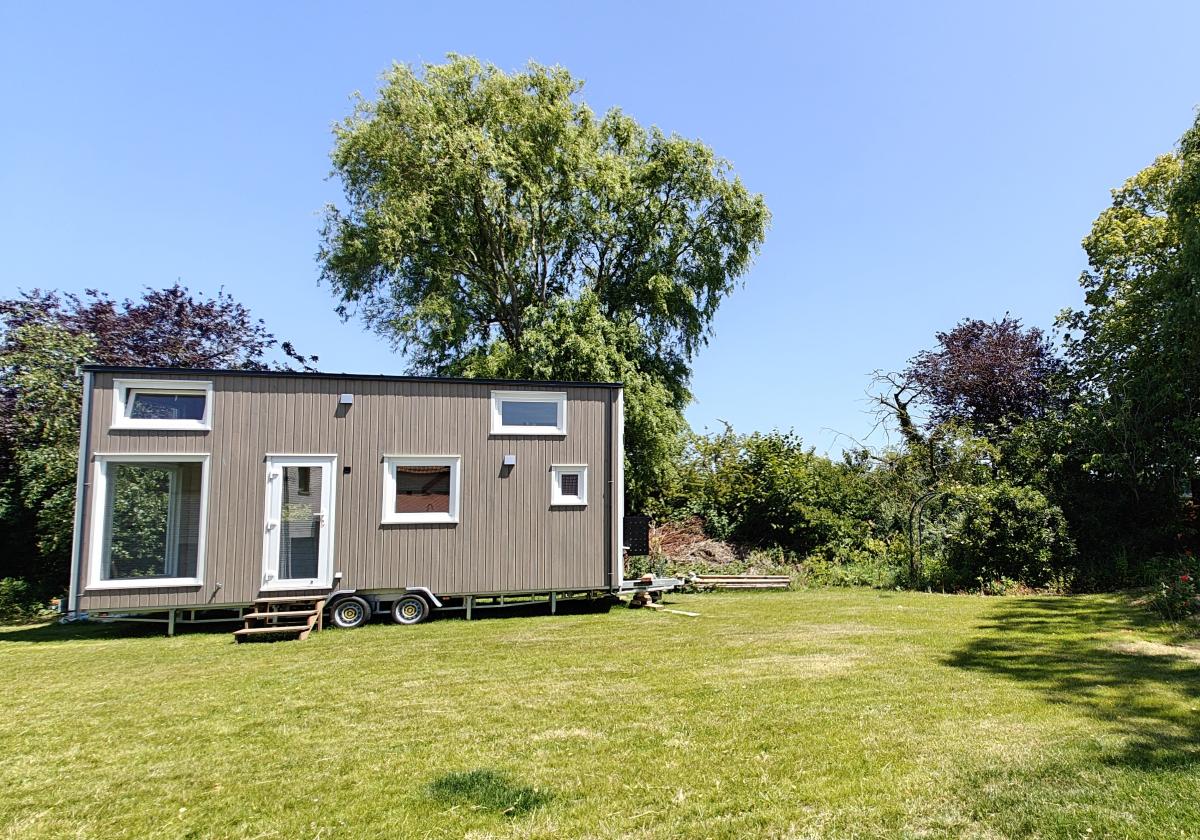
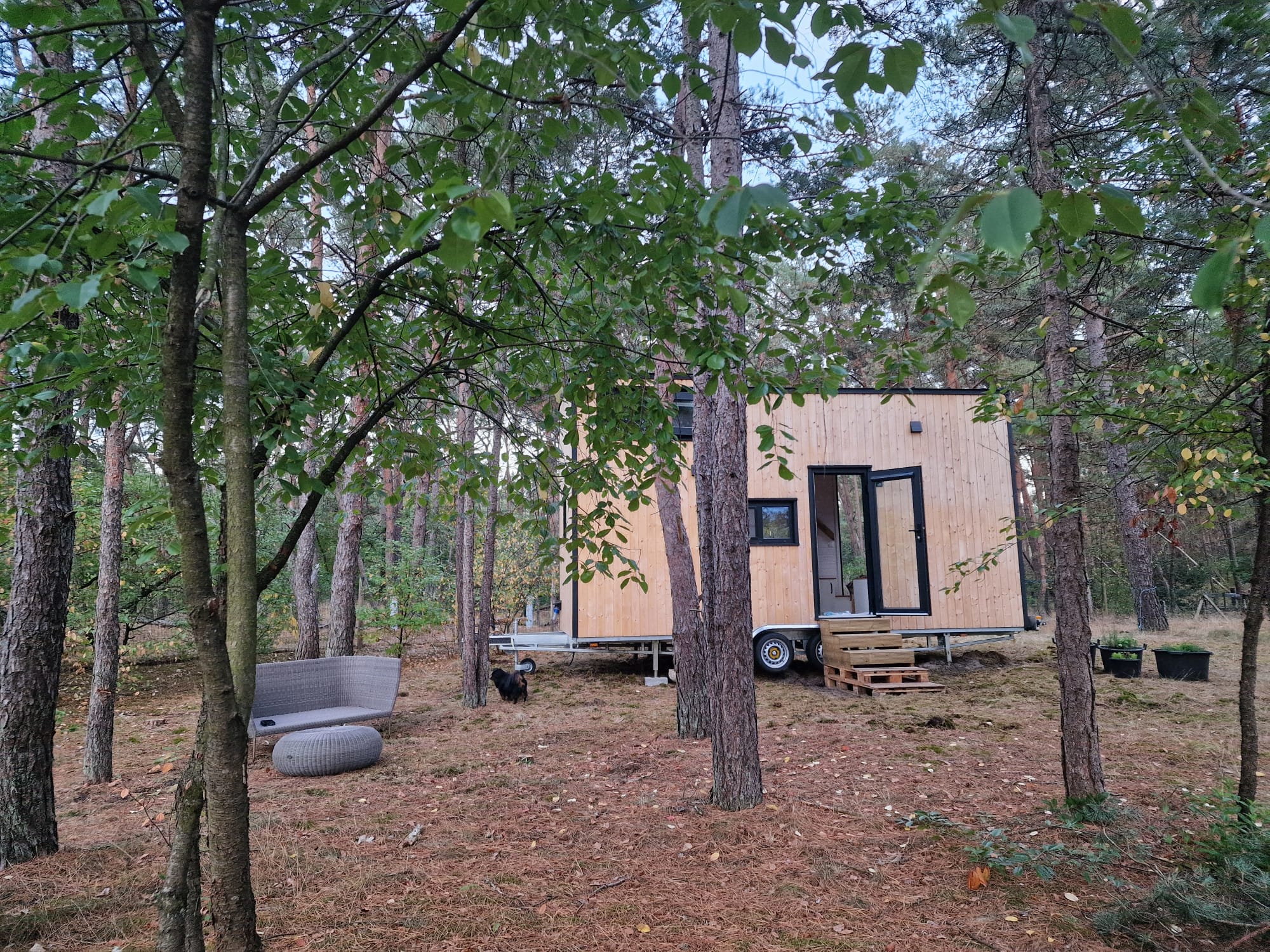
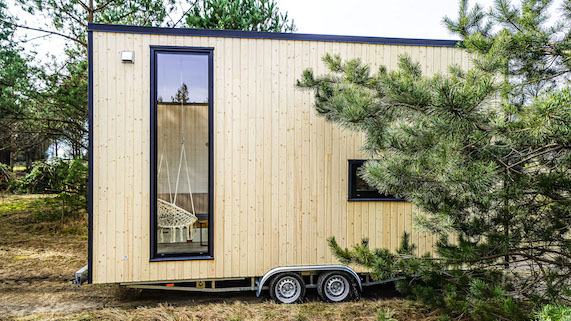
A tiny house on wheels from Tiny Wonder scores quickly on five or more of these criteria: it is movable, demountable, lightweight, without foundations and of limited volume. So you clearly fall within the definition.
Important distinction: the 'habitation légère' is explicitly not a tourist accommodation (gîte, Airbnb) and also not a professional space (hairdresser, nursery). These two uses fall outside this framework and are subject to other regulations.
Do you need a town planning permit?
Yes, in principle always.
The placement of a tiny house in Wallonia is subject to a town planning permit, regardless of the construction system. This applies equally to:
- the installation of a fixed structure (container, immobile caravan)
- the usual use of a site for mobile installations (tiny houses, caravans)
- The conversion of an existing structure into a dwelling
The good news: in most cases, you have no architect needed. The Code du Développement Territorial (CoDT) provides an exemption from requiring an architect for:
- Lightweight dwellings in prefabricated or kit form (yurts, tiny houses, caravans, Roulottes)
- lightweight dwellings without a storey, with a surface area under 40 m² and a maximum height of 2.50 m at the eaves and 3.50 m at the ridge
A Tiny Wonder tiny house on wheels typically falls into the first category (prefabricated/kit), which guarantees exemption from needing an architect.
Where can you place a tiny house?
This is a crucial point. In Wallonia, the permitted zones for a tiny house as a residential destination are limited to:
- Habitat zonesgeneral residential areas
- Rural habitat zonesresidential areas with a rural character
As a habitable dwelling, placing a tiny house in agricultural, industrial, or forest areas is fundamentally not permitted for permanent residency.
For tourist purposes different rules apply. Anyone wishing to use a tiny house as a gîte or B&B falls under the Walloon Tourism Code. In rural areas, use as a “farm gîte” is permitted. In forested areas, a tiny house for tourist purposes is sometimes allowed for weekend use, depending on regional forest policy.
Practical tip: consult the Géoportail de la Wallonie (geoportail.wallonie.be) to check the destination of a plot. The Union des Villes et Communes de Wallonie also has a useful overview of relevant map layers to assess the feasibility of your project.
The reality: considerable municipal freedom
On paper it sounds clear. In practice, there is one major complicating factor: Each Walloon municipality interprets the rules differently..
Some municipalities refuse permits for tiny houses almost automatically. Other municipalities allow them, sometimes even on agricultural plots. There is therefore a broad grey area and much depends on the goodwill and information available to the local official.
What helps:
- Submit a well-substantiated and documented permit application
- Explicitly state that your project qualifies as “habitation légère” within the meaning of the CWHD
- Add photos, plans, and technical data sheets (such as those for your tiny house)
- Contact the municipal planning department beforehand for an informal discussion
- Refer to the decree of 2 May 2019 and the CoDT provisions
Certain municipalities, such as Tintigny and Ottignies-Louvain-la-Neuve, have their own frameworks or pilot projects concerning lightweight housing. These pioneering municipalities are interesting references to cite in your report.
Temporary permit for mobile homes
An important change that came into effect on 1 April 2024: the decree of 13 December 2023 stipulates that the town planning permit for the normal use of land for mobile installations, including light mobile dwellings, will henceforth limited in time.
What that means in concrete terms:
- The licence for a tiny house on wheels has an expiry date
- The exact duration will be determined per project
- For anyone who wants to live on a plot of land long-term, this creates uncertainty about continuity.
This is a point of criticism from the sector: how do you invest in site development (roads, utility connections, wastewater treatment) if the permit is temporary? Follow the evolution of the regulations via the Rassemblement Wallon pour le Droit à l’Habitat (rwdh.be).
What standards must your tiny house comply with?
If your tiny house is used as a permanent residence (for your own use or rental), minimum hygiene and habitability standards apply. These are laid down in implementation decrees from December 2020 and have been specifically adapted to the reality of light dwellings.
The main points of attention:
- Minimum habitable surface area (equivalent to that of classical dwellings)
- Shower with hot water required
- Structural stability (no dry rot infection, sound construction)
- Smoke detectors present
- Bathroom ventilation openings
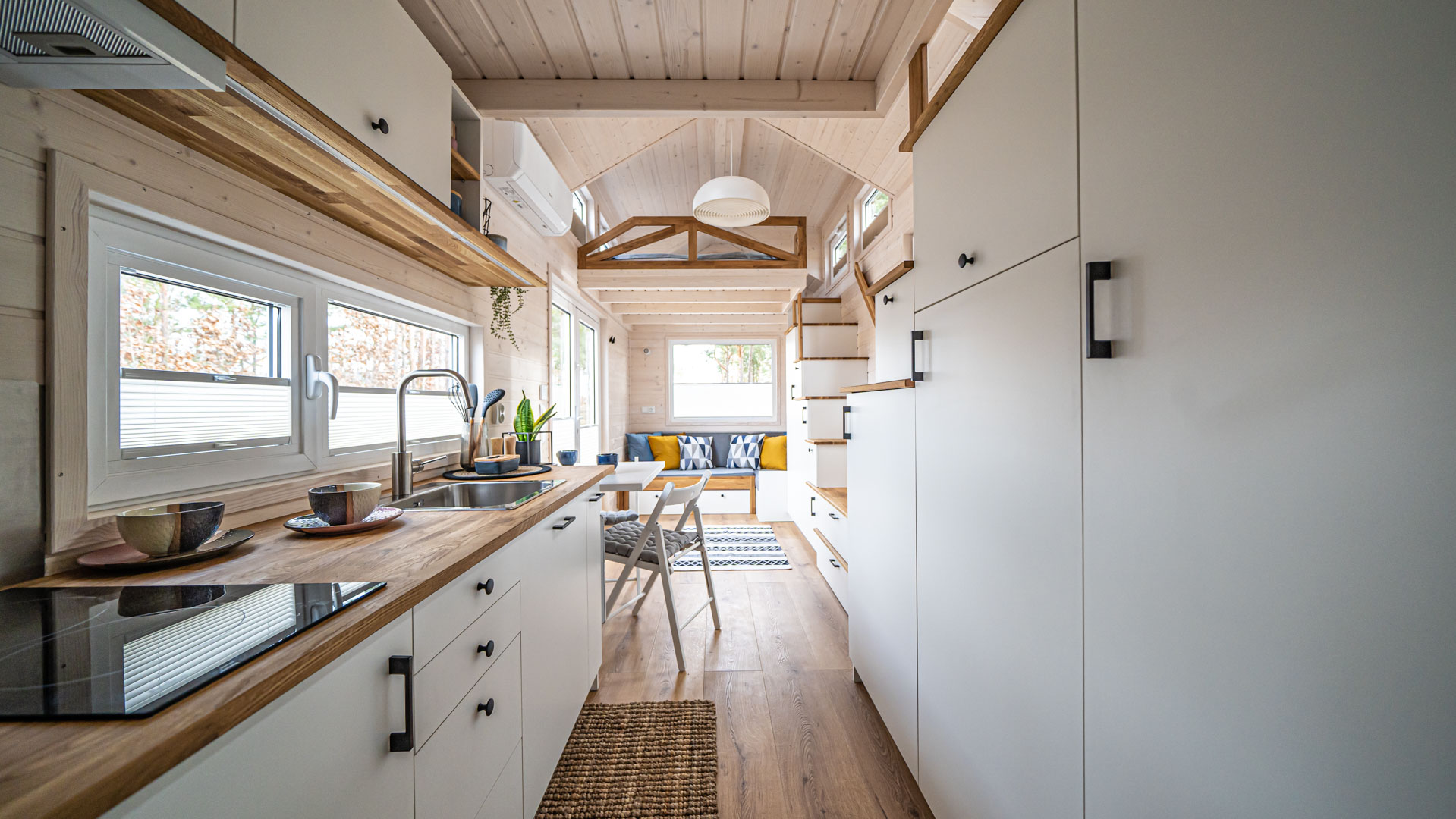
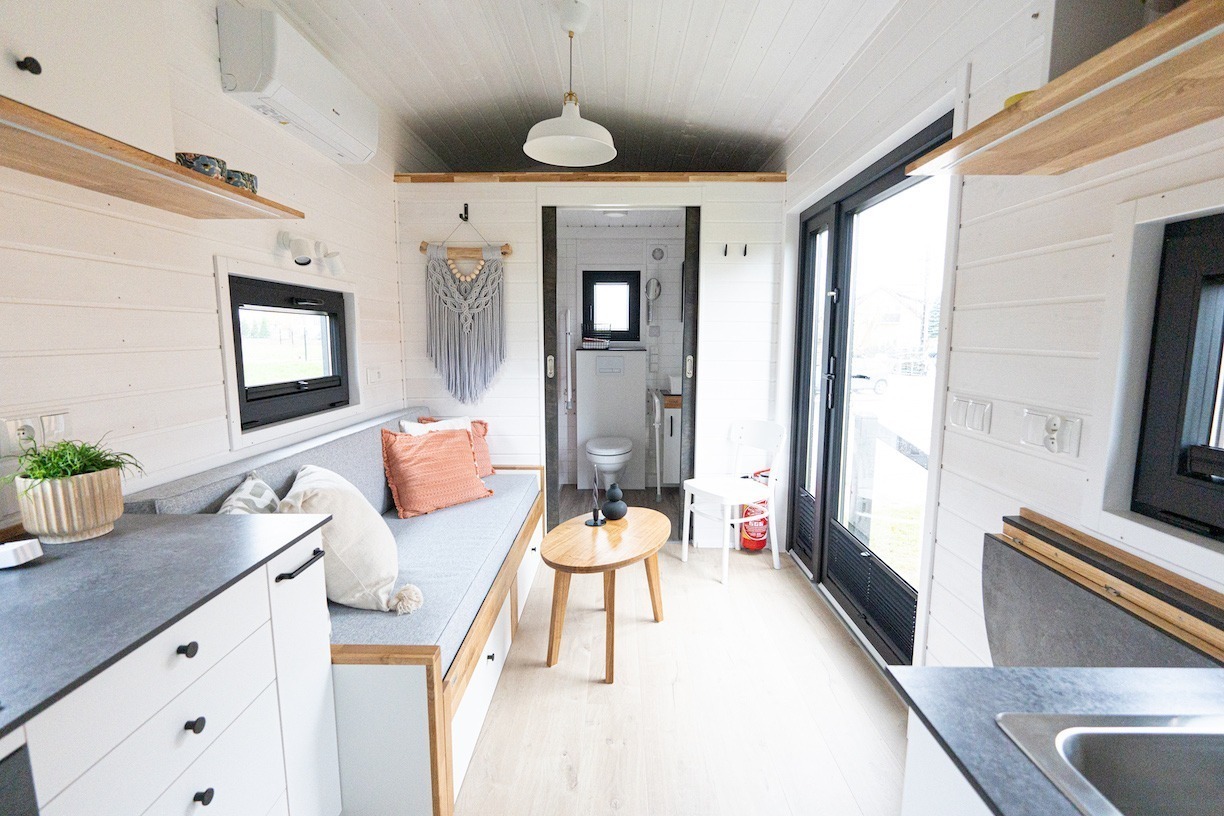
A Tiny Wonder tiny house as standard meets all these requirements: 50-litre electric boiler, walk-in shower with water-free design walls, bathroom ventilation, smoke detector and fire extinguisher included.
Is it possible to register your official residence in a tiny house in Wallonia?
Yes, this is legally possible, but often disputed in practice.
Since the recognition of light dwellings in the CWHD, it has been established that the main residence can be located in a light dwelling. Domiciliation is determined based on the actual situation: where do you spend most of the year?
In practice, there are two stumbling blocks:
- Some municipalities refuse direct debits because they consider the tiny house to be “irregular” on town planning or hygiene grounds.
- The direct debit can be considered “provisional” in the absence of a valid urban planning permit.
So, always make sure you have your permit first. After that, the path to domiciliation is legally clear.
Renting out a tiny house in Wallonia: what are the rules?
Do you want to rent out your tiny house as a primary residence to a tenant? Then additional rules apply:
- You have a rental permit (rental permit) required before you are allowed to rent out
- To obtain the permit, you must demonstrate that your tiny house complies with the hygiene standards, safety regulations (including fire safety), and urban planning provisions.
- The rules surrounding the rental agreement fall under the Walloon Tenancy Decree (décret du bail d’habitation), which was expanded in 2019 with provisions for light dwellings.
For tourist rentals (gîtes, glamping, B&Bs), the provisions of the Walloon Tourism Code apply. In this case, the hygiene standards of the CWHD do not apply.
Tiny house for renovation, care or other temporary situations
The regulations in Wallonia are less explicit than in Flanders. In Wallonia, there isn't an equivalent to the Flemish “zorgwonen” with a notification procedure. Any temporary placement for renovation, caregiving, or a life crisis must be handled through the standard permit procedure.
On the plus side, the temporary nature of its use can be an argument in your planning application to demonstrate that the impact on the environment is limited.
Step-by-step guide: how to proceed in Wallonia
Step 1: Check the development plan
Use the Géoportail de la Wallonie to verify if the plot lies within a residential zone or a rural residential zone.
Step 2: Contact the local council
Informally ask the Urban Planning department of your municipality about their experience with light dwellings and what their stance is.
Step 3: Prepare a strong case
Gather: technical data sheets for the tiny house, photographs, plans (elevations, floor plan), site plan for the plot, and a justification note referencing the decree of 2 May 2019 and the CoDT provisions.
Step 4: Submit your application
In most cases without an architect. Use the online platform of the municipality or the Walloon government.
Step 5: Follow up and anticipate questions
Remain available for questions from the case officer. A proactive and transparent attitude significantly increases the chance of a positive decision.
Step 6: Requesting direct debit
Once your permit is in order, you can apply for direct debit with the municipal administration.
Veelgestelde vragen
Do I need to hire an architect for my tiny house in Wallonia? In most cases, no. Prefabricated or kit-built light habitations are exempt from the requirement for architectural assistance, provided they meet the CoDT conditions.
Is a tiny house on wheels a "habitation légère" in Wallonia? Yes. A tiny house on wheels generally meets at least five of the eight criteria: movable, demountable, limited weight, limited volume and without a fixed foundation.
Can I register my residence in my tiny house in Wallonia? Yes, this is legally possible. However, some municipalities refuse it in practice. A valid urban planning permit is the best guarantee.
In Wallonia, tiny houses are generally permitted for residential use in zones designated for housing, specifically in residential zones (zones d'habitation) and mixed-use zones (zones d'habitat mixte) where residential use is allowed.However, it is crucial to consult the specific regional and local regulations, as well as the municipal zoning plans (plans de secteur and plans communaux d'aménagement) of the municipality where you intend to place the tiny house. These plans detail specific restrictions and requirements for dwellings, including those for tiny houses.Key considerations often include:* **Dwelling requirements:** Zoning plans typically outline standards for permanent dwellings, such as minimum surface area, construction materials, connection to public utilities (water, electricity, sewage), and structural integrity. Tiny houses may need to meet these requirements, or specific regulations for atypical dwellings might exist. * **Mobility and Permanence:** The definition of a "dwelling" in zoning plans often implies permanence. If the tiny house is intended to be mobile, it might be classified differently and could be subject to regulations for mobile homes or temporary structures, which might have different placement rules. * **Sanitary and Technical Connections:** Ensuring proper connection to essential services like water, sanitation, and electricity is a common requirement for any dwelling. * **Urbanism and Aesthetics:** Local authorities may have rules regarding the visual impact and integration of any new dwelling into the existing urban or rural landscape.**Important Steps:**1. **Contact the local municipality (commune):** This is the most important step. Speak with the urban planning department (service urbanisme) to inquire about the specific regulations for tiny houses and where they can be legally placed. 2. **Review the "Plan de Secteur":** This is the regional zoning plan for Wallonia. 3. **Review the "Plan Communal d'Aménagement" (PCA) or "Schéma de Développement Communal" (SDC):** This is the local zoning plan for the specific municipality.Different municipalities may have different approaches and specific allowances or restrictions for tiny houses. Habitats and rural habitats only. Different rules apply for tourist purposes and other zones may also be possible.
Is it permissible for me to rent out my tiny house in Wallonia? Yes, but you need a rental permit (permis de location). This requires you to comply with hygiene standards and urban planning regulations.
Is there an equivalent of Flemish 'zorgwonen' in Wallonia? No, there is no specific notification procedure for housing in care in Wallonia. You must follow the normal permit procedure.
How long does the permit for a mobile tiny house in Wallonia last? Since 1 April 2024, the permit for mobile recreational dwellings is limited in time. The exact duration will be determined on a case-by-case basis.
Tiny Wonder also guides you in Wallonia
Whether you want to get started in Hainaut, Namur, Liège, Luxembourg, or Walloon Brabant: the principles remain the same, the application varies per municipality. Tiny Wonder would be happy to help you think about the feasibility of your project, the technical requirements on site, and the arguments that will make your permit application stronger.
Would you like to know which model best suits your situation and location in Wallonia? Or would you like to know the practical steps for renting or buying a tiny house?
Get in touch via info@tinywonder.be of via WhatsApp op +32 473 52 72 91. You can also apply directly via tinywonder.be/huren or tinywonder.be/buy.
 Nederlands (België)
 Français de Belgique
 English (UK)